Where Are You With AI? (And Why Starting Here Matters)
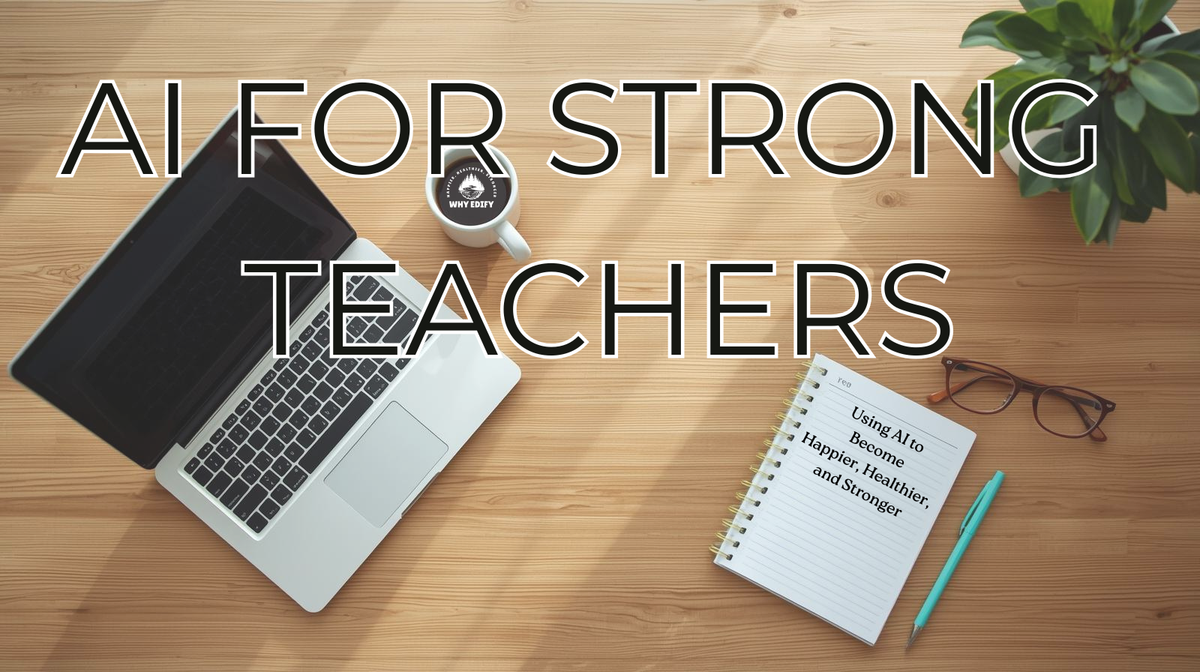
The AI for STRONG Teachers Course is alive and growing in the STRONG Teachers Lounge. Here's an update on the newest addition.
The AI for STRONG Teachers Course is alive and growing in the STRONG Teachers Lounge. Here's an update on the newest addition.
We're getting whiplash.
Use AI, they tell us. It'll save us so much time. But also? AI's coming for our jobs.
So some of us are experimenting quietly, wondering if we're cheating. Others are avoiding it completely, worried we're already behind.
Nobody's saying the obvious thing: there's no "right" way to feel about this.AI showed up fast. The rules are fuzzy at best. And everyone—even the people selling us AI solutions—is making it up as they go.
These are some of the things I have been thinking about as I create the AI for STRONG Teachers course.
The Problem With Most AI Training for Teachers
Walk into any AI workshop, and we see the same playbook: someone demos ChatGPT, dumps a bunch of prompts on us, and promises we'll save hours every week.
What we won't get:
- Space to say "I'm confused and I don't get this"
- Permission to be skeptical or resistant
- Help figuring out what AI should and shouldn't touch in our practice
- Real talk about what feels risky or wrong
Most AI training makes it seem like we're already sold. It skips "why" and "whether" and jumps straight to "how."
Module 1 flips that.
What Module 1 Is Designed to Do
It meets us where we are.
Excited but lost? Tried it and hated the results? Using it on the down-low and feeling weird about it? Think it's going to tank education? Think it's overhyped garbage?
All valid.
The module walks you through the AI Spectrum—from totally resistant to completely dependent—and helps you figure out where we land. No judgment attached. Because the goal isn't to turn us into AI power users. It's to find the spot where AI helps without stressing us out.
It tells us what AI actually is.
AI is pattern-matching. It looks at massive amounts of text and predicts what word should come next. That's the whole thing. It doesn't think. It doesn't know stuff. It's really good at sounding human, but it's not.
This matters. Once we get what AI actually does, we stop expecting magic and start seeing where it's useful versus where it falls flat.
It helps us audit where we're at.
The AI Audit guide has 13 questions:
- Have we used AI? What worked? What was weird?
- What drains us most?
- Which tasks are repetitive? Which needs our creativity?
- What do we value most about our teaching?
- What would we never automate?
And the big one: If we could protect one thing about our teaching from ever being automated, what would it be?
That answer? That's what's irreplaceable about us. Everything else builds from there.
Why This Matters (Especially Now)
We're running on fumes. The workload's not sustainable. And AI's being pitched as the fix.
But here's the catch: if we don't know what we value, what drains us, and where our lines are, AI just becomes one more thing we're reacting to. One more thing to keep up with. One more source of stress. That goes against the STRONG Teacher Framework.
This module helps you explore:
- What your actually hoping AI might help with
- What feels off or risky about it
- Where your boundaries need to be (even if we haven't drawn them yet)
Because the real question isn't "How much AI should I use?"
It's "What kind of teacher do I want to be, and does AI help me get there?"
What Happens After Module 1
Next up in the course is Module 2: Your AI Philosophy Statement.
That's where we take what we learned about ourselves and turn it into something concrete—laying out: What AI has to do for us, What AI's allowed to do, What AI can never touch
Your Philosophy Statement becomes your filter. When you're wondering whether to use AI for something, you've got a framework. Not mine. Not someone else's. Yours.
The Bigger Picture
The STRONG Framework—Successes, Thoughts & Takeaways, Recovery & Renewal, Optimize, No to Perfectionism, and Gratitude & Growth—comes from three philosophies: Ikigai (purpose), Stoicism (control), and Kaizen (continuous improvement).
Before we can use AI in ways that fit our purpose, we've got to know where we're starting. That's what Module 1 is for.
Who This Is For
It's for you if...
- Want to try AI but have no clue where to start
- Have messed around with it and aren't sure if we're doing it "right"
- Feel guilty using AI or worried it's somehow cheating
- Are skeptical but open to seeing what's real versus hype
- Want to use AI in ways that last, not just ways that look productive
It's for teachers who want to think clearly about AI before they commit.
And it's for those of us already using AI who feel like we're winging it—and want something more solid to stand on.
Module 1 of AI for STRONG Teachers is live inside The STRONG Teacher's Lounge. Premium members can jump in now.
Not a premium member but want a philosophy-first approach to AI that doesn't feel like tech hype? You can learn more and join here.
The question's not whether AI is good or bad. It's: what do we want it to do for us, and what do we need it to stay away from? Following along as the course continues to grow.
Strong Teacher Pep Talk Playlist