When Screens Shortchange Learning: Why Paper Still Matters in the Classroom
Students comprehend more deeply when reading on paper vs. screens. Explore the research on cognitive costs of screen-heavy learning and five practical strategies to reclaim deep work in your classroom.
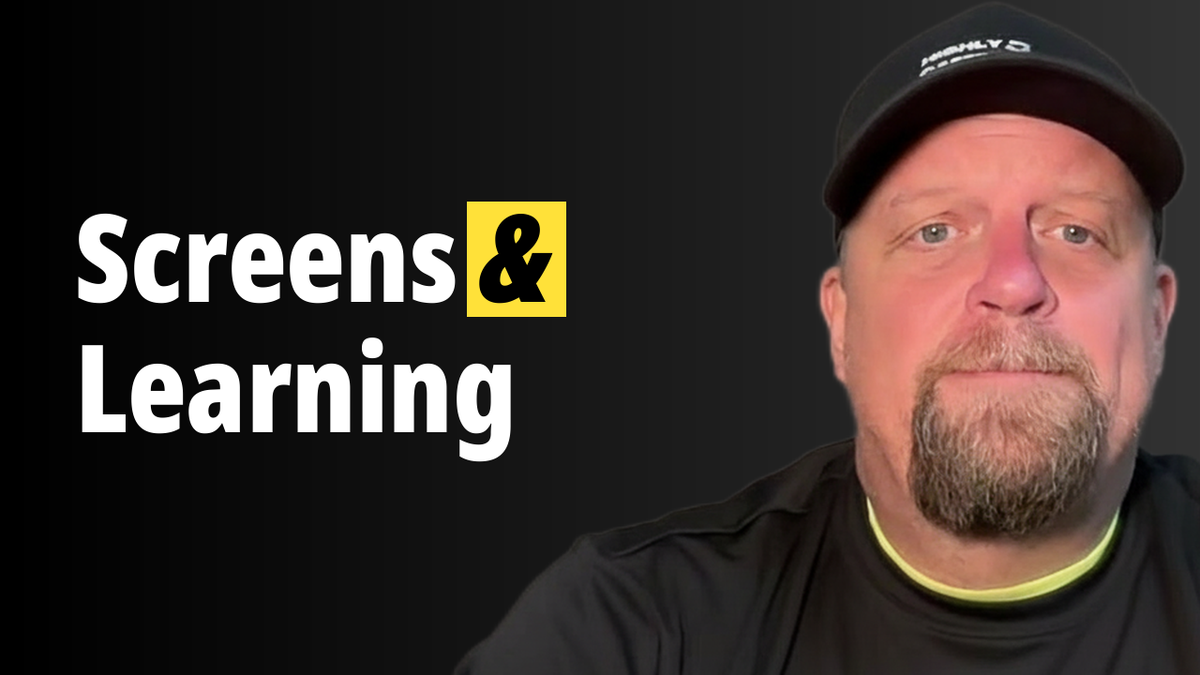
Latest episode of The Why Edify Podcast
For years, the narrative has been clear: more technology equals better learning. But what if this assumption deserves a pause?
In this week's episode, I explore a tension many teachers feel but rarely name—the cognitive cost of screen-heavy learning environments and what we can do about it.
The Problem with Information Grazing
When students read on screens, something shifts. They scroll quickly, jump between tabs, and look for shortcuts. Researchers call this "information grazing"—students are moving fast, but everything stays surface level.
Here's the tricky part: students often feel like they understand. Speed masquerades as mastery.
Digital environments are optimized for efficiency over effort. And the issue isn't that students are lazy—it's that the environment itself encourages shallow processing instead of deep thinking.
Paper, on the other hand, slows things down. It invites annotation. It creates friction. And that friction? That's where learning sticks.
What the Research Shows
Students comprehend more deeply and remember longer when they read on paper instead of screens—especially with complex texts. Why?
- Paper reduces distractions
- It anchors attention in physical space
- It encourages rereading and reflection
- It makes thinking visible
Screens are designed for movement, not meaning.
And here's the tension: schools are investing heavily in devices, but we may not be getting the cognitive return everyone hoped for. We see it when students rush through assignments, when written responses feel superficial, when focus fractures.
Five Practical Strategies to Reclaim Deep Work
1. Use paper strategically for deep work
Close reading, annotation, problem-solving, reflection—let paper carry the cognitive load for tasks that require sustained attention. Screens can support, but shouldn't dominate.
2. Start class in an analog way
Begin with a paper warmup, quick write, or sketch. This signals to students' brains: we're settling in, slowing down, and thinking deeply.
3. Teach single-tasking explicitly
Close all the tabs. Do one thing at a time. This isn't just a classroom strategy—it's a life skill many of us (myself included) need to rebuild.
4. Use tech where it truly adds value
Research, collaboration, creation, simulations—that's where technology shines. Don't waste it on tasks paper does better. A paperless classroom shouldn't be the goal anymore.
5. Engage students in the "why"
Explain why you sometimes choose paper over screens. When students understand the purpose, buy-in improves—and they start building the balance they'll need for life beyond your classroom.
The Bigger Picture: Modeling Intentional Living
How we use screens in the classroom teaches students how to use screens in life. When we model intentionality, we're not just protecting attention—we're teaching focus, agency, and cognitive endurance.
This isn't about going backwards. It's about moving forward with wisdom.
Technology was dropped into schools before we fully understood its impact on learning and cognition. Now we're finally in a position to analyze, adapt, and make better decisions.
Listen to the Full Episode
In this episode, I dig deeper into the research, explore the classroom tensions teachers are navigating, and offer practical ways to bring balance back to learning environments.
Listen on Apple Podcasts | Listen on Spotify | Listen on YouTube
If this resonates with you, share it with a colleague who's wrestling with the same tensions. And if you want to continue exploring questions about screens, focus, wellbeing, and sustainable teaching, join us inside The STRONG Teacher's Lounge—where these conversations continue.
Until next time: Teach with intention. Protect attention. And keep becoming a happier, healthier, and stronger teacher.
Have thoughts on this topic? Leave a comment below or reach out—I'd love to hear how you're navigating this in your classroom.